

For organisations operating across multiple sites, teams, and risk profiles integrated risk management directly influences cost control, decision quality, operational resilience, and commercial credibility.
When safety, health, environmental and quality risks are managed in disconnected systems, information fragments. Decisions slow. Problems repeat. Costs rise quietly through inefficiency, incidents, insurance exposure, and legal risk.
Integrated risk management addresses this by connecting risk data, actions, and assurance into one coherent view, enabling earlier intervention and better business decisions.
According to the UK’s Health and Safety Executive (HSE):
- In 2024/25, an estimated 680,000 working people sustained a non-fatal injury at work (Labour Force Survey estimate).
- 124 workers were fatally injured in work-related incidents in Great Britain in 2024/25.
- 92 members of the public were killed in work-related accidents in the same period.
- Work-related ill health and injury resulted in an estimated 40.1 million working days lost in 2024/25.
- The estimated cost of workplace injury and ill health was £22.9 billion (2023/24 conditions).
These figures show both the scale of injury and the continued significance of workplace safety, reinforcing why effective risk management delivers measurable business value.
Commercial credibility and tender readiness
Organisations with demonstrable control over risk are easier to do business with.
Clear governance, consistent processes, and auditable evidence of risk management strengthen trust with clients, partners, insurers, and regulators.
This directly supports tender success, supplier approval, and long-term client relationships, particularly where ESG, corporate responsibility, and assurance are part of procurement decisions.
Operational efficiency through standardised processes
Disconnected spreadsheets and paper systems duplicate effort and suppress insight. Integrated risk management enables assessments, controls, and actions to be created once, shared consistently, and reused across teams and locations.
Standardisation reduces administrative time, prevents rework, and ensures lessons learned in one area are applied everywhere, improving efficiency without adding bureaucracy.
An ongoing task is to maintain momentum as a new, younger and unaware generation join the workforce, maintaining SHEQ management cultures and awareness, through training and business intelligence tools to shine a light on where the risks truly lie.
Reduced insurance exposure and financial volatility
Insurers assess not just what risks exist, but how well they are managed. Organisations that can evidence structured risk assessments, incident trends, corrective actions, and governance oversight are demonstrably lower risk.
This can influence premiums, excesses, and claims experience, while also reducing the indirect costs associated with unmanaged or recurring incidents.
Fewer incidents and lower lost-time costs
Every preventable incident carries hidden costs: absence cover, overtime, productivity loss, investigation time, and management distraction.
Integrated systems support earlier hazard identification, clearer accountability, and faster corrective action.
The result is fewer incidents, reduced lost time, and less disruption to day-to-day operations.
Reduced legal and enforcement risk
Regulatory enforcement increasingly focuses on what organisations knew, when they knew it, and what action they took.
Integrated risk management provides a clear audit trail: identified risks, assigned actions, completion evidence, and leadership oversight.
This reduces exposure to enforcement action, fines, and reputational damage, while strengthening governance and accountability at board level.
Visibility, dashboards and better decisions
Many organisations still rely on spreadsheets, shared drives, and paper records to manage safety and risk. They’re familiar, but they fragment information, hide trends, and slow decision-making as soon as you’re dealing with multiple sites, teams, or contractors. To dive deeper into this topic you can read our blog on Why File-Sharing Tools Create Hidden Health & Safety Risk
When safety data lives in disconnected files, it becomes harder to see what’s changing and where intervention is needed. You lose fast answers on recurring issues, hotspots, overdue actions, and whether controls are actually working. That delay is where avoidable cost and disruption builds.
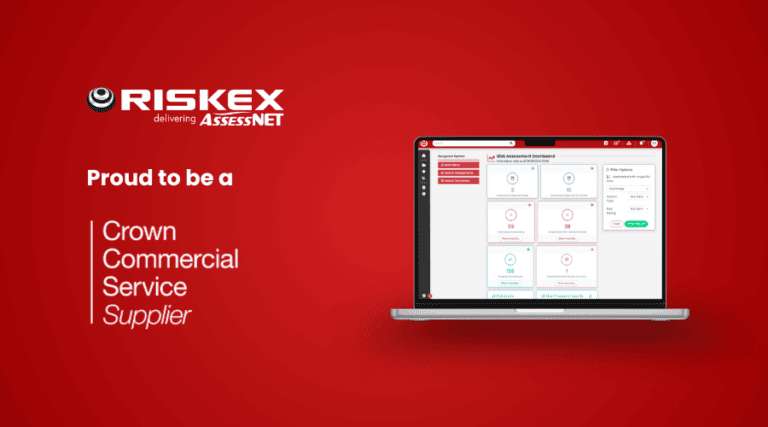
Integrated risk management replaces static records with live, connected data. Dashboards bring incidents, hazards, actions, and assurance activity into one view, making it easier to prioritise resources and act early based on evidence, not assumptions.