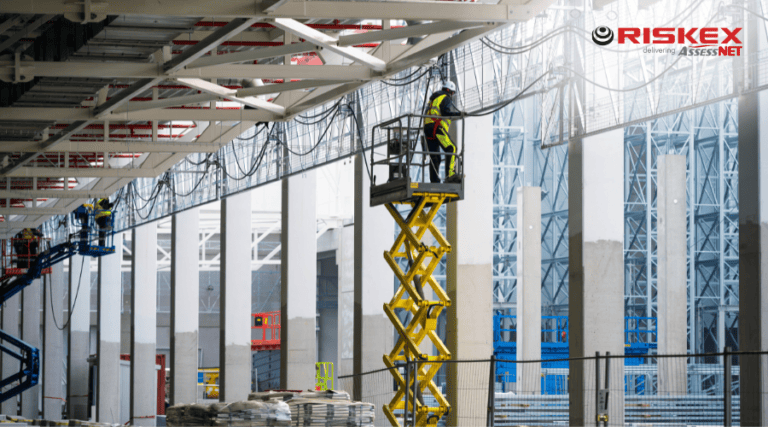


As the weather improves, routine maintenance will restart. Roof inspections, gutter clears, plant repairs, PV installs, skylight work. This seasonal uplift also reintroduces the risks of ladder misuse, unplanned roof access, and contractors working beyond what you expected.
Falls from height remain the leading cause of fatal workplace injuries in Great Britain, with 35 worker deaths recorded in 2024/25.
Roofs:
Treat the unknown as fragile until proven otherwise
Fragile surfaces are not rare edge-cases. Rooflights, fibre cement sheets, corroded metal, glass, tiles, and older panels can all fail without warning. Work on or near fragile surfaces should be avoided where possible. If not, control the remaining risk using proper platforms/stagings, guardrails, and fall protection.
Minimum controls to insist on for any roof task:
- No “walk the purlins” culture. HSE explicitly warns against it.
- A planned safe system of work:
- how access is gained
- where people can and can’t step
- what collective protection is in place
- what rescue looks like if fall arrest is used.
- Physical protection matched to the roof risk: platforms/stagings, guardrails, covers, safety nets, fall restraint/fall arrest as appropriate (and only with a rescue plan).
- Competence confirmation before work starts: someone capable of identifying roof construction, rooflight risk, edge protection needs, and anchor suitability.
Ladders
Ladders and stepladders can be appropriate for low-risk, short-duration work, but they are not a substitute for proper access equipment.
“Short duration” is typically no more than 30 minutes at a time on a ladder.
Ladder misuse patterns to target:
- Using ladders for extended tasks (roof patching, prolonged clearing, repeated carrying).
- Working side-on and overreaching instead of repositioning.
- Unsecured ladders on uneven ground or poor ground conditions after winter.
- Carrying tools/materials by hand instead of using tool belts/hoists.
Controls to enforce every time:
- Three points of contact at the working position (two feet and a hand, or two feet and body support briefly when both hands must be free).
- Selection rules: right ladder type, right load rating, suitable condition, correct positioning, and a pre-use check regime.
- Escalation rule: if the job needs both hands for sustained periods, heavy handling, awkward reach, or repeated trips, ladders are the wrong tool. Use a tower scaffold, podium, MEWP, or fixed access.
Contractor management
Use HSE’s contractor management framework:
- define the job
- choose the right contractor
- assess risk
- exchange information
- Supervise/monitor
- Cooperate/coordinate
- review performance.
Read full guidance here: https://www.hse.gov.uk/pubns/indg368.pdf
Non-negotiables for roof/height work contractors:
- A short, written scope that states exactly what the contractor is hired to do, exactly where, and exactly what they are not allowed to do.
- A pass/fail check of their Risk Assessment and Method Statement before they come on site. Method statements that actually match your site (roof type, fragile areas, edges, access points, exclusion zones, weather limits).
- Site information pack: roof drawings (if you have them), known fragile zones, access restrictions, isolation requirements, emergency arrangements, and permit rules.
- A named competent person checks the job at key points
- A short, structured close-out so you learn and tighten controls: capture deviations, near misses, and contractor performance so spring doesn’t repeat last spring.
Practical spring readiness checklist for H&S leaders
Use this as a pre-season reset:
- Roof risk register updated: roof types, rooflights, fragile panels, edge risks, anchor points, access routes.
- Permit-to-work rule for any roof access (including short jobs).
- Contractor pre-qualification refreshed: competence evidence for work at height, rescue capability, and recent similar jobs.
- Ladder controls refreshed: selection criteria, pre-use checks, and a hard stop on ladder use for prolonged/two-handed work.
- Briefing in place for anyone who might request roof work (facilities, maintenance, ops managers): when to escalate, when to refuse “quick fixes”.
- Incident and near-miss prompts: specific categories for ladder slips, roof access, rooflight risk, and contractor deviations (so you can trend the season).
How AssessNET supports working at height control
Risk Assessment module
- Build task-specific work-at-height assessments for roof access, ladders, fragile surfaces, and rescue
- Enforce your risk matrix so access choice (ladder vs tower/MEWP) is driven by scored risk
- Keep control current with version history, review dates, and attached plans/RAMS (drawings, roof registers, exclusion zones)
Manual Handling module
- Assess carrying/handling risks linked to height work (materials to roof level, repeated trips, awkward loads)
- Reduce overreach and loss-of-balance drivers by documenting safer handling methods and controls
Contractor Management module
- Pre-qualify contractors (competence, insurances, training, WAHR capability, rescue capability)
- Approve RAMS before arrival and keep documents current with expiry controls/reminders
- Record supervision checks, deviations, and actions against contractor records for trend and reappointment decisions
Permit to Work module
- Control roof access with permit conditions (weather limits, edge protection, exclusion zones, rooflight controls, access routes, isolations)
- Require sign-off at pre-start, handback, and close-out
- Trigger stop-work and replan when scope changes or controls fail (fragile discovery, missing edge protection, unsafe ladder placement)