
Being struck by a vehicle or other moving object is one of the most serious and most common causes of injury and fatality in UK workplaces. The HSE consistently highlights this hazard in industries ranging from construction to warehousing.
These incidents are preventable, but only with careful planning, clear procedures, and proper use of equipment. In this post, we’ll explore how to manage the risk of being struck by a moving object, particularly vehicles, lift trucks, and site transport.
Before going into the ways these risks can be prevented, it is necessary to understand how they actually occur in practice. Real incidents investigated by the HSE show consistent patterns where control measures were either missing, poorly implemented, or not enforced. These are not isolated failures, but predictable outcomes when vehicle and pedestrian risks are not properly managed.
Case example: Worker crushed by excavator (waste site)
A worker was struck from behind and run over by an excavator while working on a waste pile at a recycling site. He was only in his second week on the job. The investigation found he was operating in close proximity to moving plant with no physical separation in place. There was no risk assessment or defined system of work to manage vehicle movements, leaving pedestrians exposed in an active plant area.
This required a basic but enforced safe system of work: physical segregation between pedestrians and plant, clearly defined traffic routes, and exclusion zones around operating machinery. Risk assessments should have identified the interaction between manual sorting and moving vehicles, with controls implemented before work began. Supervision and site design needed to eliminate shared spaces entirely, not rely on awareness or visibility.
Case example: Telehandler crushing incident (recycling yard)
A worker suffered life-changing injuries after being crushed against a wall by a reversing telehandler while sorting waste in a shared yard. Pedestrians and vehicles were operating in the same space, and the worker was positioned at the edge of the yard when the vehicle reversed into him. The investigation found no suitable risk assessment, no effective segregation, and poor visibility from the vehicle due to missing mirrors.
This required enforced separation between pedestrians and vehicles, supported by physical controls rather than informal practices. Reversing operations should have been minimised or controlled with visibility aids and defined procedures. The absence of mirrors indicates a failure in equipment checks and maintenance. A structured traffic management plan, exclusion zones, and supervision of yard activities were needed to prevent workers from being placed in direct line of vehicle movement.
Case example: Worker killed by reversing skip wagon
A worker was struck from behind and fatally crushed by a reversing skip wagon while walking across a weighbridge at a waste transfer station. Although segregation measures existed, CCTV showed they were routinely ignored, with workers bypassing pedestrian routes and climbing over barriers. The company had failed to properly monitor and enforce these controls, allowing unsafe behaviours to become normal practice.
This required not just the presence of controls, but active enforcement and monitoring. Segregated walkways and barriers only function if they are used and supervised. Regular audits, behavioural monitoring, and intervention were needed to ensure compliance. Site rules should have been enforced consistently, supported by supervision and a safety culture that does not tolerate shortcuts in high-risk environments.
Vehicle safety
Controlling the risk of being struck by a vehicle
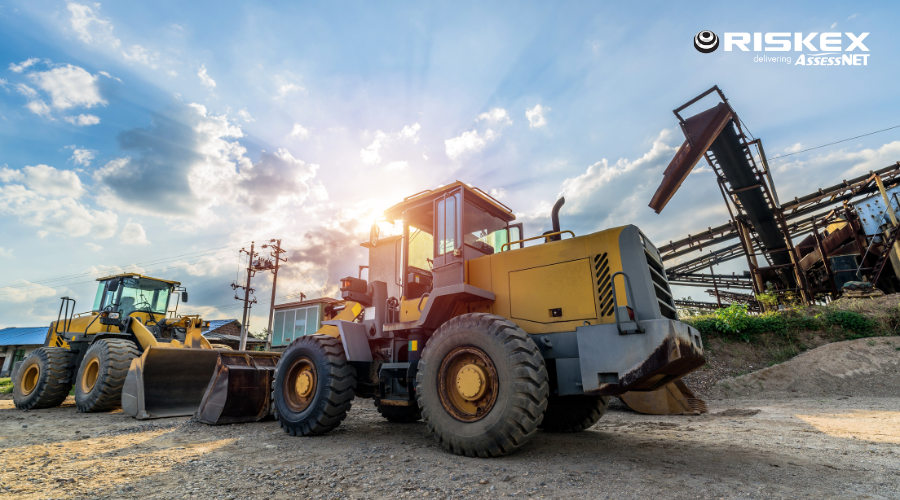
Whether it’s a delivery van, dumper truck, or reversing HGV, workplace transport poses a serious risk to pedestrians. Being struck by a vehicle is a leading cause of fatal accidents on UK construction and industrial sites, often due to inadequate segregation, blind spots, or poor reversing procedures.
HSE guidance emphasises:
- A clear separation of vehicles and pedestrians is critical.
- Sites must have planned traffic routes that reflect the work environment.
- All drivers must be trained, and vehicles regularly maintained and fitted with appropriate safety features.
Best practices:
- Install barriers, bollards, and kerbing to physically separate vehicles from foot traffic.
- Create one-way systems to eliminate or reduce reversing.
- Equip vehicles with reversing alarms, cameras, and mirrors.
- Require hi-vis clothing. Note this should never be relied on as the primary safety measure.
- Provide delivery and loading zones that restrict access to authorised vehicles and personnel only.
Site safety
Layout and movement management
Poorly designed sites increase the chances of pedestrians being struck by moving objects, including site vehicles, plant, and loads being transported. Congested areas, unclear signage, and uncontrolled access points create a dangerous mix.
HSE guidance emphasises:
- Develop and maintain a site-specific traffic management plan.
- Ensure clearly marked pedestrian walkways, crossing points, and signage.
- All workers and visitors must be briefed on movement risks through induction and supervision.
Best practices:
- Use barriered walkways and physical separation rather than painted lines alone.
- Eliminate blind corners and shared access routes.
- Maintain good lighting, especially in vehicle movement areas.
- Use consistent signage that is easily understood.
- Provide induction training to every worker, subcontractor, and visitor on traffic hazards and safe zones.
Lift trucks
Forklifts and pallet trucks are essential tools in warehouses and logistics operations — but they are also one of the most frequent causes of struck-by incidents. Injuries often occur when pedestrians enter forklift routes or when operators are distracted or rushed.
HSE guidance emphasises that:
- Operators must be formally trained and certified.
- Pedestrian and vehicle routes must be segregated wherever possible.
- Trucks should be well maintained and used only in designated areas.
Best practices:
- Create pedestrian exclusion zones where lift trucks operate.
- Use floor markings, mirrors, warning lights, and barriers to improve visibility and control.
- Enforce speed limits and horn use around corners and doorways.
- Use proximity sensors or pedestrian detection systems where feasible.
- Monitor operator performance through supervision and periodic re-training.
The role of digital systems in preventing struck-by incidents
Even when the right controls are defined, the failure point is often consistency. Procedures may exist on paper, but are not applied uniformly across sites, shifts, or teams. This is where digital systems become critical in turning intent into repeatable practice.
A structured health and safety system ensures that risk assessments and safe systems of work are standardised, accessible, and actively used. Staff can access the correct information at the point of work, rather than relying on memory or outdated documents. Changes to site layouts or control measures can be updated centrally and reflected immediately across all locations, reducing the risk of outdated practices persisting.
Equally important is the ability to capture issues as they arise. Real-time hazard and near-miss reporting allows organisations to identify breakdowns in segregation, unsafe behaviours, or equipment issues before they escalate into incidents.
When combined with task tracking and clear ownership, corrective actions are not only identified but followed through to completion. This closes the gap between identifying risk and actually controlling it, which is where many struck-by incidents originate.
Conclusion: How to prevent struck-by incidents on your site
The key to preventing injuries from being struck by a vehicle or moving object lies in eliminating close contact between people and machinery wherever possible. This includes:
- Planning vehicle routes and pedestrian walkways in advance.
- Using engineering controls like barriers, alarms, and sensors.
- Training workers, enforcing traffic rules, and monitoring behaviour.
- Maintaining all equipment to ensure it is safe and visible.
By addressing these risks proactively, businesses not only reduce the chance of injury, but also improve the overall efficiency and professionalism of their site.