

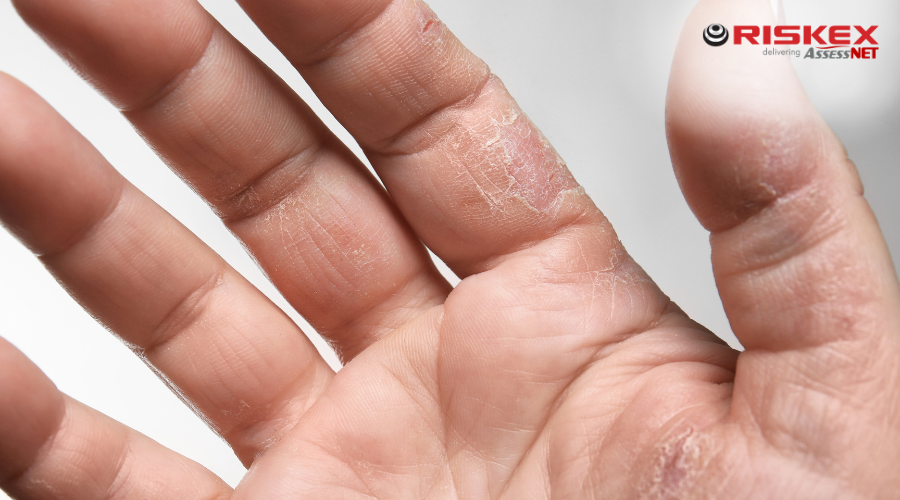
Why work-related skin disease is important
Work-related skin disease (WRSD) is one of the most common occupational health problems in the UK, yet most cases are preventable. Dermatitis accounts for over 70% of WRSD cases and can lead to long-term pain, time off work, reduced quality of life, and significant costs for employers.
What causes WRSD at work?
WRSD usually develops when skin is repeatedly exposed to hazards at work, including:
- Irritants and sensitisers – chemicals, detergents, solvents, resins and adhesives
- Wet work (frequent handwashing or hands wet for long periods)
- Oils, greases, cutting fluids, contaminated surfaces and tools
- Friction and abrasion from manual tasks
- UV exposure for outdoor workers and professional drivers
Skin exposure is not only “direct contact” with a substance. It also happens via contaminated work surfaces, tools, PPE, clothing, and residues transferred hand-to-hand.
Early signs of dermatitis to act on quickly
Encourage early reporting if anyone experiences:
- Redness or swelling
- Itching
- Dryness, flaking or scaling
- Cracking, splits, or bleeding
- Blisters
Early action prevents progression and reduces the chance of long-term damage.
What employers should do to prevent work-related dermatitis
1) Undertake a dermal exposure risk assessment
Here are some items to identify during the risk assessment process:
- Hazardous substances and processes as well as potential wet work
- How exposure happens (direct contact, splash, contaminated surfaces/tools, PPE transfer)
- Who is exposed, how often, and for how long
- Existing controls and gaps
2) Apply the Safe Working Distance approach (SWD)
Prioritise controls that reduce direct skin contact:
- Eliminate the hazard where possible
- Substitute for safer products
- Engineering controls (enclosure, automation, dispensing systems, LEV where relevant)
- Improved work methods (tools to avoid hand contact, handling techniques, rotation where appropriate)
- PPE as a last line of defence
3) Make hygiene practical and consistent
Here are some things you can put in place if you haven’t already:
- Suitable washing facilities with mild cleansers
- Effective hand drying (dry hands properly, damp skin increases irritation risk)
- Cleaning routines for tools and work surfaces to prevent contamination transfer
- Appropriate workwear cleaning and storage
4) Get glove selection and glove use right
Common failures include the wrong glove material, wrong size, poor removal technique, and over-reliance on gloves without cleaning/skin care. Here are some controls to consider:
- Match glove type to the substance and task (supplier input helps)
- Train correct donning/doffing and when to change gloves
- Keep reusable gloves clean and stored correctly
- Wash and dry hands after glove use
5) Provide a workplace skin care system
A workable routine typically includes:
- Pre-work cream (where appropriate, but this is not a substitute for gloves/controls)
- Mild cleanser, avoiding any harsh cleaning methods like solvents on skin
- Moisturiser after washing and at end of shift
- Use hygienic dispensers
6) Introduce regular skin checks and act fast
Set expectations for early reporting and supervisor support. If symptoms appear:
- Review tasks, products, exposure routes, and controls immediately
- Re-check glove choice, washing facilities, and skin care provision
- Escalate for occupational health input where needed
UV exposure and skin cancer risk at work
UV should be treated as an occupational hazard for outdoor work and professional drivers. At a high level, controls include:
- Planning work to reduce peak UV exposure where possible
- Shade and shelter options
- Covering up: long sleeves, brimmed hat, UV-rated eyewear
- Broad-spectrum sunscreen (minimum SPF 30 with UVA protection) applied correctly and reapplied
About the 2026 relaunch: “It’s In Your Hands” campaign
The BSIF has relaunched and expanded the “It’s in your hands” campaign to reduce preventable WRSD through:
This has a stronger emphasis on early detection and early action along with clearer guidance for risk reduction and legal responsibilities. It talks about the Practical advice on glove use, skin care routines, and regular skin checks, as well as Sector-specific considerations (construction, manufacturing, food processing, hairdressing, cleaning). There is a wider scope covering dermatitis, hazardous substance exposure, and UV-related skin cancer risks.
The campaign presents a consistent prevention framework centered on Safe Working Distance (SWD)
Found out more about the campaign here
What to do next in your workplace
- Re-check CoSHH and dermal exposure assessments for high-risk tasks
- Identify wet work hotspots and contamination transfer routes
- Standardise glove selection, training, and storage/disposal
- Implement a simple skin care system with dispensers and training
- Introduce routine skin checks and a clear reporting route
- Share the “It’s in your hands” campaign materials with teams and supervisors