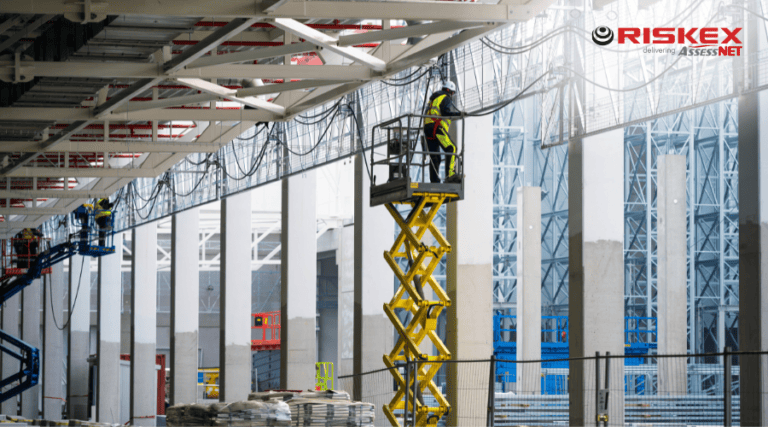

Falls from height remain one of the leading causes of fatal workplace incidents in Great Britain.
In 2024/25, 35 people lost their lives due to a fall from height at work, accounting for 28% of all workplace deaths. These incidents continue to affect workers across construction, manufacturing, agriculture, facilities management, warehousing and maintenance activities.
Behind every statistic is a person, a family and a life permanently changed. That is why campaigns like No Falls Week are so important.
What is No Falls Week?
Launched in the UK in 2024, No Falls Week is a national campaign focused on raising awareness around safe working at height and driving improvements in fall prevention across industry.
The campaign is run by the No Falls Foundation and brings together organisations, safety professionals, employers and workers with a shared goal: ensuring everyone who works at height comes down safely.
The campaign provides a wide range of free resources and educational content, including:
- Guidance and best practice resources
- Industry toolbox talks and videos
- Real-life stories from people affected by falls from height
- Interactive activities and awareness challenges
- Community engagement across multiple sectors
The campaign is not just about compliance. It is about changing behaviours, challenging complacency and keeping the realities of work at height visible.
The human stories behind the campaign
One of the most powerful elements of No Falls Week is the people behind it.
The No Falls Foundation works closely with ambassadors who have personally experienced the life-changing consequences of falls from height. Their stories bring a human perspective to a risk that can often become normalised in day-to-day operations.
Jason Anker MBE
Jason Anker MBE was paralysed from the waist down after falling from a ladder in an avoidable workplace accident in 1993.
Since then, he has become one of the UK’s most recognised advocates for height safety, speaking openly about the physical and psychological impact of his accident. His work promoting safer working practices led to him being awarded an MBE.
Jason explains:
“Before the charity was founded there was nowhere to go and no-one to talk to if you had been in an accident like mine. Being given a wheelchair or a holiday is no substitute for being able to talk through your feelings with someone.”
His story remains a stark reminder that unsafe work at height can have lifelong consequences in seconds.
Paul Blanchard
Paul Blanchard suffered devastating injuries after falling from height, including a broken back, fractured ribs, head injuries and a punctured lung.
He spent three months in an induced coma and six months in hospital recovering from the incident.
Today, Paul regularly shares his experiences to help organisations understand the human cost behind workplace accidents.
He says:
“When I was told that I would be in a wheelchair for the rest of my life, I was scared. The fear was of the consequences of the accident and not knowing what life was going to be like in the future. I had a lot of dark moments.”
He also highlights the importance of the Foundation’s work in spreading awareness and supporting prevention efforts across industry.
Dylan Skelhorn
Dylan Skelhorn was working as a solid fuel heating engineer when the chimney he was working on collapsed beneath him.
He fell 10 metres onto a brick wall, sustaining multiple severe injuries.
Dylan now uses his experience to educate organisations about the importance of proper planning, safe systems of work and risk awareness.
He explains:
“Research is part of prevention which is why it’s an essential element of the charity’s work. Working together we can create a safer workplace.”
His story demonstrates that these incidents are not historic problems. Falls from height continue to happen across modern workplaces and often during routine tasks.
Why these stories matter so much
One of the strongest messages behind No Falls Week is that falls from height are rarely caused by a single failure.
Incidents are often linked to:
- Poor planning
- Inadequate supervision
- Unsafe assumptions
- lack of training
- Incomplete risk assessments
- Incorrect equipment selection
- Pressure to complete “quick jobs”
The stories shared by the Foundation’s ambassadors reinforce that prevention requires more than policies and paperwork alone.
It requires organisations to actively build safer behaviours, maintain visibility over risk and create working environments where safety is prioritised before shortcuts.
As the ambassadors themselves put it:
“It happened to us… don’t let it happen to you!”
Keeping the conversation going
No Falls Week serves as an important reminder that work at height risks should never become routine or underestimated.
Whether the task involves ladders, fragile roofs, roof access, inspections, maintenance or elevated work platforms, the same principle applies: every task must be properly planned, assessed and controlled.
Awareness campaigns alone cannot prevent incidents, but they play an important role in keeping the conversation active, sharing lessons learned and reinforcing why safe working at height matters.