
Two serious incidents. Two different sites. One consistent failure.
A chemical manufacturer was fined £3.8 million after two workers were exposed to caustic soda. One incident led to a below-knee amputation. The other required skin grafts following chemical burns. The locations differed, but the outcome did not and unfortunately exposure was not prevented.
The investigation by the Health and Safety Executive (HSE) identified repeated breakdowns in how risk was assessed, controlled and managed.
What happened at West Thurrock in 2019
A worker stepped into a puddle containing caustic soda while carrying out his duties. The chemical penetrated his safety boots, which were not fit for purpose, causing severe burns that led to amputation.
The surrounding conditions were already compromised including:
- Multiple leaks from pipework, valves and hoses
- No structured inspection or maintenance regime
- Ground conditions allowing hazardous liquids to pool
- No clear or enforced walkways
- No effective spill control process
What happened at Grays in 2022
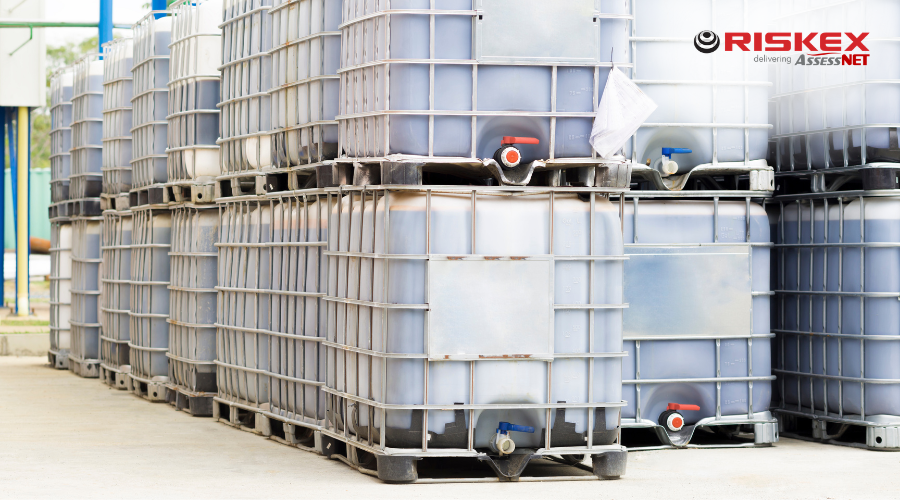
At a second site, a worker was manually decanting 50% caustic soda into containers. Drips from a hose contacted his foot, resulting in burns that required skin grafts.
The task itself was fundamentally unsafe. There was no risk assessment in place and no documented safe system of work to define how it should be carried out. The process relied on direct manual handling of a highly corrosive substance, exposing the worker to unnecessary risk. More critically, a safer alternative already existed in the form of an automated dosing system, yet it had not been used, meaning the exposure was entirely avoidable.
Following the incident, the process was removed entirely by changing how materials were supplied. The risk was eliminated only after harm occurred.
Where the system failed
Across both incidents, the same pattern appears. Known hazards were present. Early warning signs existed. No meaningful intervention followed.
Under the Control of Substances Hazardous to Health Regulations 2002, the priority is to prevent exposure. Where that is not possible, risks must be controlled through engineering, process design and safe systems of work. PPE is the last line of defence.
That hierarchy was not applied. Leaks were not treated as triggers for maintenance, pooling chemicals were not treated as containment failures, and manual handling was not challenged where automation already existed. Instead of prompting review, escalation and redesign, these warning signs appear to have been allowed to continue until serious harm occurred.
The first incident should have triggered wider review
The first incident should not have been treated as a site-specific failure. It should have prompted a company-wide review of how caustic soda was stored, transferred, handled and controlled across every location.
Where one worker had suffered life-changing injuries after stepping into a contaminated puddle, the immediate response should have gone beyond that area of the West Thurrock site. It should have raised wider questions about chemical spill management, inspection and maintenance regimes, drainage, designated walkways, PPE suitability and emergency response arrangements.
The second incident happened at a different site, but again involved exposure to caustic soda. That suggests the learning from the first incident had not been fully applied across the organisation.
After a serious chemical exposure, every similar task and environment should be reviewed. Not just the specific location where harm occurred, but every process where the same substance, equipment or working conditions exist.
How digital systems can support safer chemical management
Cases like this show why chemical safety processes need to be easy to record, review and act on. When issues such as leaks, spills, damaged PPE or unsafe working areas are managed through informal conversations or disconnected documents, it becomes much harder to see whether the problem has been properly resolved.
A digital health and safety system can help create a clearer link between what is reported, who is responsible for action, and whether the control has been completed. For example, a chemical spill or damaged item of PPE can be logged straight away, assigned to the right person and tracked through to close-out.
It also makes it easier to review whether the issue is isolated or part of a wider pattern. If similar concerns are being raised across different sites, locations or tasks, that should prompt a broader review of risk assessments, COSHH controls, maintenance schedules and safe systems of work.
This is particularly important after a serious incident. The learning should not stay limited to one site or one team. Digital systems can help organisations share findings, update procedures, communicate changes and evidence that the right actions have been taken.
Find out how AssessNET can support safer, more consistent chemical management across your organisation.
Our comprehensive chemical management software helps you manage COSHH assessments, SDS libraries, chemical inventories, risk controls, training records and corrective actions in one connected system.
create a safer, smarter, and more informed workforce with AssessNET