
Vibration-related illness is one of the most preventable occupational health conditions in UK manufacturing. Yet a recent HSE prosecution serves as a stark reminder that for some organisations, the systems and processes needed to protect workers simply aren’t in place and the consequences are severe.
Outline of the case
In February 2026, a metal fabrication company operating at Immingham Docks in Northeast Lincolnshire, was fined £44,000 and ordered to pay over £8,000 in costs after pleading guilty to breaching Section 2(1) of the Health and Safety at Work etc. Act 1974. Seven employees had developed vibration-related illnesses. Some were kept awake at night by numbness in their hands. Others experienced finger blanching during everyday tasks like mowing the lawn. Several described an inability to grip and lasting nerve damage.
Understanding HAVS and WBV
Before examining what went wrong at Drury Engineering, let’s revisit what HAVS and WBV actually are, because they are two distinct but related conditions that manufacturing H&S professionals need to manage carefully.
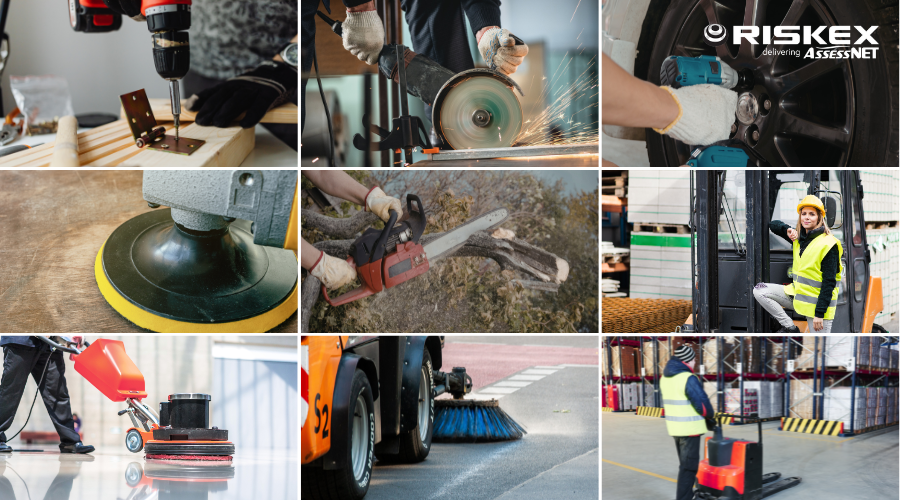
Hand-Arm Vibration Syndrome (HAVS) is caused by regular and frequent use of vibrating hand-held or hand-guided power tools like grinders, drills, impact wrenches, chisels, and similar equipment that are commonplace on fabrication floors. Prolonged exposure causes damage to the blood vessels, nerves, muscles, and joints of the hands, wrists, and arms. In its early stages, workers may notice tingling or numbness. In advanced cases, the condition is irreversible and life-altering.
Whole-Body Vibration (WBV) occurs when vibration is transmitted through a seat or floor into the body. This is most common when operating vehicles or mobile plant such as forklifts, telehandlers, or heavy machinery. Long-term WBV exposure is linked to lower back pain, spinal damage, and musculoskeletal disorders that can be equally debilitating over time.
Both conditions are governed in the UK by the Control of Vibration at Work Regulations 2005, which set clear Exposure Action Values (EAVs) and Exposure Limit Values (ELVs) that employers must measure, monitor, and act upon.
Manufacturing environments, particularly metal fabrication, engineering, and processing facilities sit at the higher end of vibration risk. Workers are likely to regularly use multiple tools across long shifts, often without adequate rotation or rest, and exposure accumulates invisibly over months and years before symptoms appear.
What the recent engineering case reveals
The facts of this case are instructive not because they represent an unusual failure, but because they represent a pattern of failure that HSE inspectors encounter repeatedly.
HSE became aware of the situation in June 2024 following three reports of vibration-related illness. An investigation was opened and an Improvement Notice served because the company had failed to reduce employees’ vibration exposure to as low a level as reasonably practicable. During the investigation, inspectors identified further affected employees, with a seventh report made later in the year.
The investigation found that they had failed on four fronts:
- It had not suitably assessed the risks from vibration exposure.
- It had not implemented the organisational and technical measures required to reduce that exposure
- It had not placed exposed employees under a suitable health surveillance programme.
- it had not provided workers with adequate information, instruction, or training.
A new health and safety manager had been appointed in June 2022 and had begun work to address issues with the vibration management system, but unfortunately by that point employees had already been significantly exposed.
This tells us two things. Firstly, that the harm had been accumulating for years before anyone with the appropriate focus was looking at it. Secondly, that awareness of a problem is not the same as having the systems in place to address it at scale and in time.
HSE Principal Inspector Chris Tilley made the message clear: “Today’s fine should send a clear message that both HSE and the courts take seriously the failure to manage employees’ exposure to vibration. HSE will not hesitate to take action against companies that do not do all they should to keep people healthy and safe.”
What should have been done and what good looks like
This case highlights the importance of a robust vibration management programme what that actually looks like. The legal framework is clear, but translating it into operational reality is where many organisations can fall short.
A compliant and genuinely protective approach to HAVS and WBV management involves several interconnected elements. It requires identifying which tools and tasks generate the highest vibration levels, calculating daily exposure for individual workers, and mapping that against the EAV and ELV defined in the Regulations.
Control measures then need to follow:
- substituting lower-vibration tools where possible
- limiting daily exposure through job rotation
- maintaining equipment to manufacturer standards (worn or poorly maintained tools generate significantly higher vibration)
- providing appropriate PPE as a supplementary rather than primary control.
Health surveillance is non-negotiable once employees are regularly exposed at or above the EAV. This means structured, periodic health checks with outcomes recorded and acted upon. Early identification of symptoms is the only way to prevent conditions from becoming permanent.
Finally, training and information must be provided so that workers understand the risks, can recognise symptoms early on, and know how and when to report.
Managing vibration risk without the right tools
Managing complex manufacturing environments is where the challenge increases for health and safety professionals. Each of those four components: risk assessment, exposure controls, health surveillance, training records generates data.
That data needs to be current, accessible, and auditable, and in organisations running multiple shifts, multiple sites, or large workforces, managing that through spreadsheets and paper-based systems is where things can go wrong quickly.
Here are some likely scenarios:
- Risk assessments get completed but not reviewed when tools change or tasks evolve.
- Health surveillance results sit in a file rather than triggering action.
- Training records are held in different formats across departments.
- No one has a clear view of cumulative exposure across the workforce.
This is a clear infrastructure failure and is precisely the type of systemic gap that leaves organisations exposed legally, operationally, and most importantly, in terms of the real harm caused to real people.
How digital safety management changes the picture
This is where solutions like AssessNET make a meaningful difference to how organisations manage HAVS and WBV risk in practice.
A centralised digital health and safety management system replaces the fragmented, manual approach with a single source of truth. Risk assessments for vibration-generating tasks can be built, reviewed, and updated within the platform, with the addition of version control and audit trails that hold up under HSE scrutiny.
Critically, the visibility that a platform like AssessNET provides allows H&S leads to see the full picture. Which workers are approaching action values, where health surveillance is overdue, which sites are behind on training completion before an HSE inspector identifies it for them.
In the context of the Drury Engineering case, that kind of oversight could have changed the outcome entirely. The harm was accumulating for years. A system that surfaces risk data in real time, flags overdue health checks, and provides a clear record of actions taken gives H&S professionals the evidence and the early warning they need to intervene.