

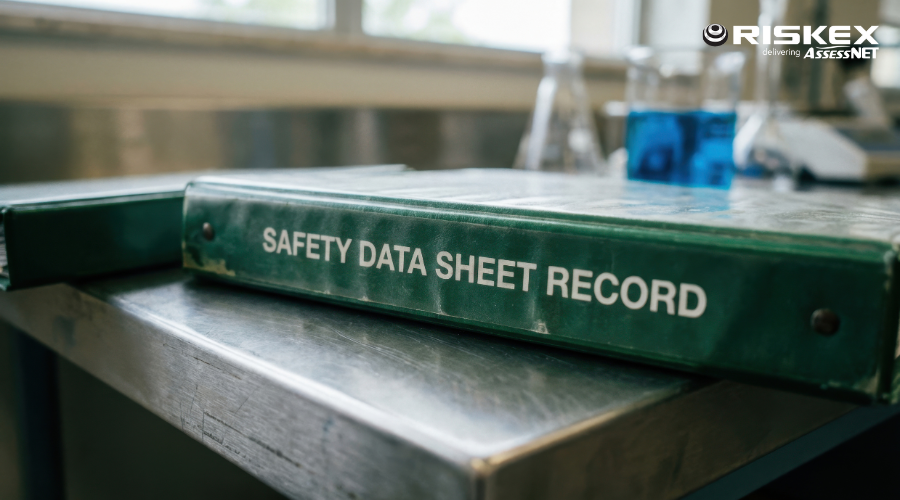
Most organisations know they need Safety Data Sheets on file. Fewer stop to ask whether the version they are relying on is still current.
That matters more than it may seem. HSE says SDS help users make a risk assessment and provide information on hazards, handling, storage and emergency measures. SDS are also required under UK REACH in the relevant circumstances, so they are not just background paperwork.
For businesses using or storing hazardous substances, an outdated SDS can influence CoSHH assessments, employee training, emergency response and day-to-day decisions about handling and control.
Why SDS become outdated
In practice, SDS often fall out of date for ordinary operational reasons. A supplier updates a document. A product is reformulated. A local copy gets saved and reused. A team keeps working from an old PDF sitting in a shared folder.
On the surface, it can look as though the organisation has the right information available. In reality, the document people are relying on may no longer reflect the current product information or control measures. HSE advises employers to check the information on the safety data sheet and make sure their risk assessment is up to date.
What can go wrong when SDS are out of date?
Emergency information may no longer be accurate
One of the most important functions of an SDS is helping people respond properly in the event of a spill, fire or exposure. If that information is out of date, the advice staff turn to in the moment may no longer reflect the substance they are actually dealing with.
HSE specifically notes that SDS include information on handling, storage and emergency measures in case of accident.
PPE and handling controls may be wrong
PPE and handling precautions should be based on current hazard information. If the SDS being used is no longer current, there is a risk people are working to outdated instructions and using controls that do not properly match the substance’s present risk profile.
HSE’s CoSHH guidance states that exposure must be prevented or adequately controlled, and PPE sits within a wider set of control measures.
CoSHH assessments may be built on poor information
CoSHH assessments are only as reliable as the information behind them. SDS help users make a risk assessment, so if the source information is outdated, there is a real risk the resulting assessment is no longer accurate or sufficient. That can leave organisations exposed from both a safety and compliance perspective.
Safer alternatives may be missed
A current SDS can support better decisions around substitution and control. If updated hazard information is not being picked up, organisations may miss opportunities to reduce exposure, replace a higher-risk substance, or tighten the way a product is used. Substitution is a core part of HSE’s CoSHH basics guidance.
Training can drift out of line with reality
Training, briefings and safe systems of work often rely on the same hazard information used in the COSHH process. When SDS are not current, that gap can carry through into what employees are taught and what they are expected to do in practice. HSE’s COSHH guidance and FAQs both treat training as part of proper hazardous substance management.
Signs your SDS management may need attention
Some warning signs are easy to miss:
- SDS are stored in multiple places
- there is no clear review or replacement process
- employees struggle to find the right sheet quickly
- CoSHH assessments and SDS dates do not align
- old product versions are still circulating internally
These kinds of issues emphasise the need for current information, up-to-date risk assessments and practical control measures rather than simply keeping documents on record.
Why this becomes a bigger problem over time
Outdated SDS rarely announce themselves as a problem. They tend to sit quietly in folders, binders and shared drives until someone needs them. By that point, the consequences are harder to contain. The organisation may believe it has a compliant process in place, while the information underpinning that process is already outdated.
That is when chemical safety starts becoming reactive instead of controlled.
create a safer, smarter, and more informed workforce with AssessNET
How digital SDS management helps
A more structured digital approach can help reduce the risk of old SDS remaining in circulation and make it easier to keep information accessible, consistent and connected to the wider COSHH process.
That matters not just for compliance, but for practical day-to-day control. People need to be able to find the right information, trust that it is current, and use it to support assessments, training and safe working. HSE’s CoSHH guidance, CoSHH Essentials and UK REACH resources all reinforce the importance of current hazard information and practical risk control.
How AssessNET’s COSHH/SDS module helps
This is where a more structured approach becomes useful.
AssessNET’s COSHH/SDS module helps organisations manage chemical safety in a more controlled and practical way by making key information easier to capture, access and apply.
Give employees access to relevant assessments
Employees can access the CoSHH assessments relevant to their work so they can see the hazards, precautions and controls that apply to the substances they use.
Reduce manual admin
Key information can be pulled from SDS documents into CoSHH assessments, helping reduce manual input and support more consistent records.
Make information easier to share
Assessments can be shared with employees, contractors and other stakeholders where needed, helping improve visibility and consistency.
Support competence through training
Training and eLearning can help reinforce the practical side of hazardous substance management, including understanding labels, SDS information, exposure risks and workplace controls.
Keeping SDS up to date is not just an administrative task. It is part of making sure the decisions, controls and training around hazardous substances are based on information people can trust.