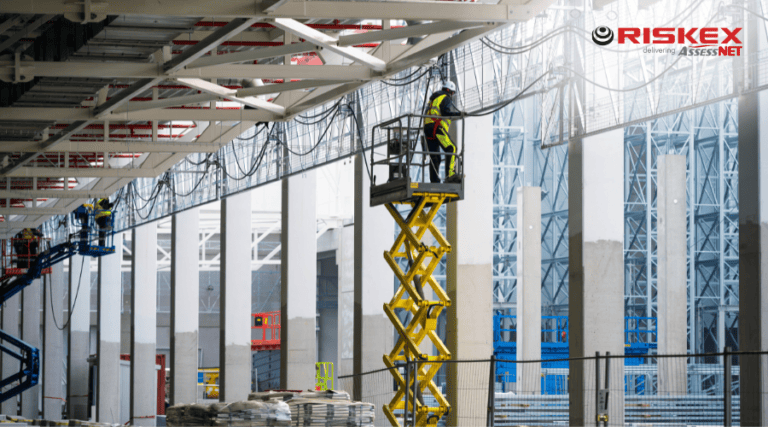

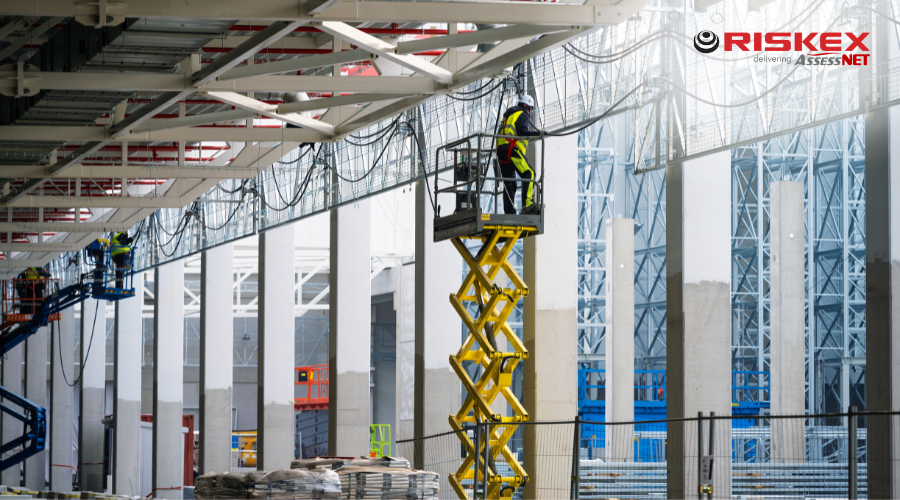
Once again, falls from height are the most common cause of fatal injury to workers in Great Britain. HSE’s latest provisional 2025/26 figures show 31 workers died after falling from height, ahead of being struck by a moving vehicle and being struck by a moving object.
Since 2019/20, the annual figures have shifted but the pattern has remained consistent:
| Year | Fatal falls from height |
| 2019/20 | 29 |
| 2020/21 | 35 |
| 2021/22 | 29 |
| 2022/23 | 40 |
| 2023/24 | 50 |
| 2024/25 | 35 |
| 2025/26 provisional | 31 |
The 2023/24 figure was a clear spike, while 2024/25 and 2025/26 show a reduction. But the issue has not gone away.
HSE states that falls from height have been the main cause of work-related fatal injury in almost every year since at least 2001/02.
Topics covered
- Why falls from height remain a persistent fatal risk
- What the GIFIS report says about current innovation
- The four safety technology areas: prevention, precaution, prediction and protection
- Why most innovation still focuses on managing work at height, not eliminating it
- How digital systems can help organisations apply these ideas in real-world safety management
The problem: work at height remains hard to control
Falls from height are rarely caused by one single failure. It’s often the combination of planning gaps, unsuitable equipment, changing site conditions, weak supervision, poor communication, missing checks or assumptions.
This is why the latest GIFIS report, Preventing the Fall: Global Innovation in Fall-From-Height Safety Technologies, is useful. It does not just look at falls from a compliance perspective. It looks at how technology is developing globally to address the risk.
The Global Initiative for Industrial Safety (GIFIS) brings together policymakers, innovators and industry leaders to explore how emerging technologies can improve workplace safety. Its work focuses on sharing knowledge, reducing industrial risks and supporting more resilient, safer working environments.
The report analyses more than 19,000 patent records relating to fall-from-height safety technologies and groups them into four categories: prevention, precaution, prediction and protection.
What GIFIS is saying
The strongest message from the GIFIS report is that most innovation still sits in the “precaution” category.
These are technologies that help workers operate more safely when they still need to work at height. This includes fall-arrest systems, scaffolds, ladders, working platforms, guardrails and anchoring systems.
Within precaution technologies, fall-arrest systems account for around 49% of patents, while scaffolds, ladders and working platforms account for around 32%. Together, these two areas make up more than 80% of precaution-related patents.
The industry has historically focused on making work at height safer, rather than always removing the need to work at height in the first place.
The shift GIFIS identifies
GIFIS also highlights smaller but emerging areas of innovation.
Prevention technologies include robotics, automation and remote inspection systems that remove or reduce the need for people to work at height.
Prediction technologies include sensors, monitoring tools, analytics and early-warning systems that help identify risk before an incident occurs.
Protection technologies focus on reducing harm after a fall, such as impact-mitigation systems, airbags, safety nets and PPE.
Traditional physical controls remain essential, physical safeguards with data, monitoring, automation and remote operation is what we need to be aiming to achieve. The GIFIS report describes this as a movement towards more integrated and preventive safety systems.
What this means in the real world
For health and safety teams, the GIFIS framework can be used to ask better questions.
- Can the work at height be avoided altogether?
- Where work at height is necessary, are the right precautions selected, recorded and checked?
- Are inspections, permits, risk assessments and actions being completed consistently?
- Are recurring issues visible across sites, teams or contractors?
- Can incident, audit and inspection data be used to spot patterns before something serious happens?
This is where digital systems become important. They help turn work-at-height controls from static documents into live safety processes.
- A digital risk assessment system can record why work at height is needed, what alternatives were considered and what controls are required.
- Inspection and audit tools can check whether scaffolds, ladders, platforms, edge protection and access equipment remain suitable.
- Permit-to-work processes can help control higher-risk tasks before work starts.
- Action tracking can make sure issues are assigned, followed up and closed.
- Incident and hazard reporting can reveal trends that may otherwise stay hidden.
The takeaway
Falls from height remain the leading cause of workplace fatality because the risk is persistent, practical and often present in everyday tasks.
The GIFIS report shows that innovation is moving in the right direction, but it also shows that many solutions still focus on managing exposure rather than removing it.
The opportunity for organisations is to connect both worlds: strong physical controls on the ground, supported by digital systems that improve planning, visibility, accountability and learning.
That is how work at height becomes more than a control measure on a risk assessment. It becomes a managed, monitored and continually improved part of workplace safety.