

The Global Initiative for Industrial Safety (GIFIS), led by Lloyd’s Register Foundation, the United Nations Industrial Development Organization (UNIDO), and Cambridge Industrial Innovation Policy (CIIP) at the University of Cambridge, recently published a new white paper exploring the future of industrial safety technology.
Titled Making Safety Tech Work: A Practical Framework for Identifying and Selecting Safety Technology Solutions for Industry, the paper examines how organisations can better assess, adopt, and implement emerging safety technologies to reduce workplace harm.
Here are some of the key takeaways from the report.
Why the industry needs to act now
The paper highlights the scale of the global occupational safety challenge and why organisations are under increasing pressure to modernise their safety approaches.
Key statistics from the report include:
- Work-related deaths increased from approximately 2.8 million in 2015 to 2.9 million in 2019 globally.
- Around 395 million workers sustain occupational injuries every year.
- Poor occupational safety and health conditions are estimated to cost 4.1% of global GDP, more than USD $3.2 trillion annually.
- Approximately 8,000 people die every day due to unsafe or unhealthy working conditions.
- 88.7% of work-related fatalities are linked to occupational diseases rather than accidents.
The white paper also outlines the leading occupational risk factors contributing to deaths globally. The top contributors include:
- Particulate and gas exposure linked to COPD
- Long working hours linked to stroke and heart disease
- Asbestos exposure
- Vehicle-related incidents
- Falls from height
- Silica exposure linked to respiratory disease
One of the report’s strongest messages is that many occupational illnesses remain “silent killers”, with impacts often taking years or decades to emerge.
AI, automation, and the future of industrial safety
The report identifies a major shift taking place across industrial safety. Moving from reactive safety management towards proactive and anticipatory safety systems. Organisations are increasingly using technology to identify early warning signs, monitor leading indicators, and intervene before harm happens.
The paper highlights several technologies driving this shift:
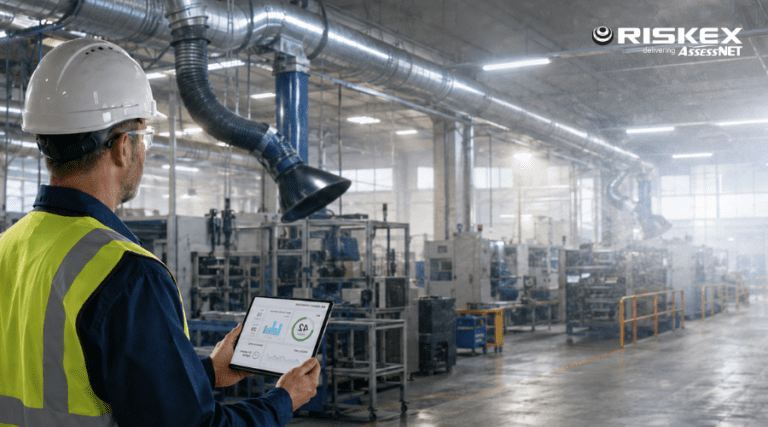
- AI-powered predictive analytics to identify emerging risks
- Real-time monitoring systems using CCTV and computer vision
- Wearable technology tracking environmental exposure and worker safety
- Predictive maintenance systems that identify equipment failures before breakdowns occur
- VR and AR training environments for immersive safety learning
- Robotics and drones reducing worker exposure to hazardous tasks and environments
The paper stresses that industrial safety is no longer being transformed by a single technology, but by a connected portfolio of technologies working together to strengthen prevention, monitoring, and intervention capabilities.
The safety tech adoption gap
Despite rapid innovation, the report highlights that adoption of safety technology still lags behind other business priorities such as productivity and operational efficiency.
The report outlines several common barriers organisations face when implementing safety technologies:
Technical barriers
- Integration challenges with legacy systems
- Poor interoperability between technologies
- Concerns around data quality and reliability
- Infrastructure limitations such as connectivity and device management
Behavioural barriers
- Worker concerns around surveillance and monitoring
- Privacy concerns linked to wearables and tracking systems
- Resistance to changing established ways of working
- Poor usability or overly complex systems reducing adoption
Organisational barriers
- Difficulty demonstrating measurable safety outcomes
- High implementation costs
- Limited internal resources and expertise
- Skills gaps in interpreting data and managing new technologies
External barriers
- Regulatory uncertainty
- Liability concerns
- Weak client or market incentives in some sectors
A key takeaway from this section is that organisations need stronger visibility of safety outcomes and ROI to justify investment and build confidence in safety technology adoption.
The 4Ps framework for assessing safety technology
One of the core elements of the white paper is the introduction of a practical framework for assessing safety technology effectiveness.
The framework categorises safety technologies into four areas:
Prevention
Technologies that eliminate or substitute hazards entirely.
Examples include:
- Safer chemical alternatives
- Process redesign
- Robotics removing workers from hazardous tasks
Precaution
Technologies focused on monitoring, surveillance, and early intervention.
Examples include:
- Environmental monitoring
- Real-time safety alerts
- Smart harness systems
- Fall protection monitoring tools
Prediction
Technologies using AI, analytics, and operational data to predict incidents before they occur.
Examples include:
- Predictive risk mapping
- AI-driven safety analytics
- Behavioural and operational trend analysis
Protection
Technologies designed to reduce the severity of consequences once incidents occur.
Examples include:
- PPE
- Advanced protective materials
- Smart protective equipment
The report positions prevention-focused technologies as the most effective because they remove hazards at the source rather than simply managing the consequences.
Key takeaways from the falls-from-height case study
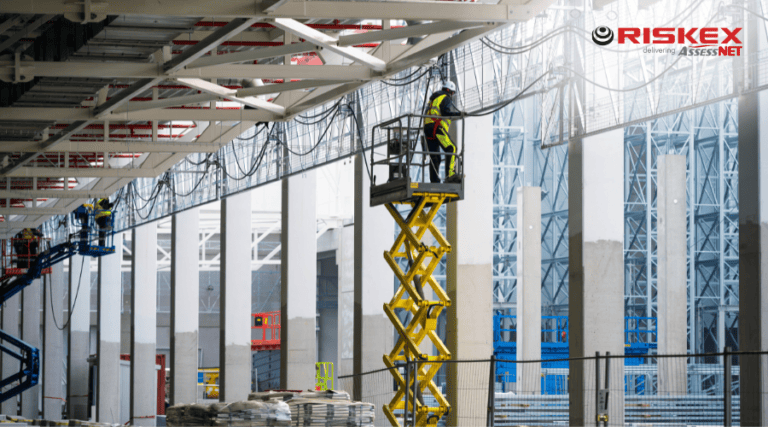
The white paper also applies the framework to falls-from-height risks, which is one of the leading causes of workplace fatalities globally.
The report highlights several important findings:
- More than 19,000 patented fall-protection technologies were identified between 2004 and 2024.
- Annual patent applications for fall-related safety technologies have increased dramatically over the past two decades.
- The industry is gradually shifting away from purely mechanical controls towards digitally enabled monitoring and detection systems.
- Smart wearables and connected monitoring devices are seeing particularly rapid growth.
- Construction and manufacturing remain the sectors with the highest adoption of fall-related safety technologies.
One case study featured in the report showed how a smart harness system used during warehouse construction in China achieved:
- Zero fall accidents during the project
- A reported 92% reduction in fall accident risk
- Significant improvements in safe working behaviours over time
Final takeaway
The central message throughout the white paper is clear: safety technology adoption is no longer simply about compliance or innovation, it is becoming a critical part of how organisations proactively identify risks, reduce exposure, and build safer workplaces.
The report argues that organisations that can successfully evaluate, integrate, and scale the right mix of prevention, precaution, prediction, and protection technologies will be far better positioned to reduce harm and strengthen long-term operational resilience.