
Why silence around symptoms is holding back understanding, prevention, and care
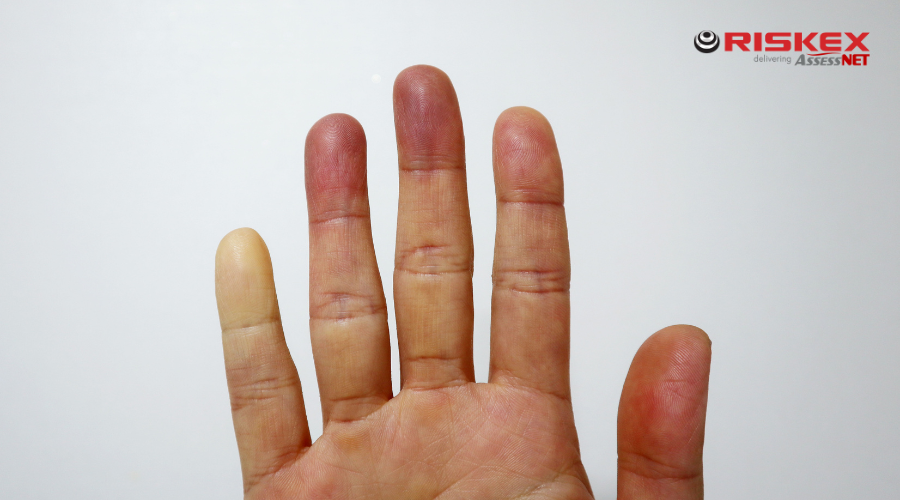
Raynaud’s affects millions of people in the UK, yet it remains one of the most under-reported circulatory conditions. Not because it is rare. Not because it is insignificant. But because it is normalised, self-managed, and often dismissed by the very people experiencing it.
That silence has consequences. Under-reporting feeds poor data. Poor data delays diagnosis, limits prevention, and slows progress.
Around 10 million people in the UK are affected by Raynaud’s, with symptoms ranging from mild and intermittent to severe and painful. Despite this scale, Raynaud’s rarely appears in formal records at anything like the same level. Why?
Because symptoms fluctuate. Attacks come and go. Many people adapt rather than report, wearing gloves indoors, warming hands with water, avoiding the cold aisle in the supermarket. Essentially planning life around temperature changes.
Normalising Raynaud’s leads to under-reporting
SRUK’s guidance highlights that Raynaud’s symptoms are often triggered by cold or stress and may be managed through practical lifestyle adjustments alone. While this advice is valuable, it also contributes to a wider problem: quiet self-management replaces visibility. When symptoms are normalised, they stop being named. When they stop being named, they stop being counted.
Under-reporting creates a data problem
Health and research data only exists if people surface symptoms. Raynaud’s consistently falls through that gap.
This results in several issues:
- Incomplete prevalence data
- Limited insight into triggers and progression
- Weak differentiation between primary and secondary Raynaud’s
- Delayed recognition of autoimmune links
- Slower development of guidance and preventive strategies
This is not a lack of medical knowledge. It is a lack of visibility.
Raynaud’s as an early warning signal for a bigger problem
For most people, Raynaud’s is primary and not linked to another condition. But for a significant minority, it is not benign.
SRUK highlights that around 1 in 10 people with Raynaud’s may have or go on to develop an autoimmune condition, such as scleroderma or lupus. Raynaud’s can be the first symptom, sometimes appearing years before anything else.
When these symptoms go unreported early warning signs get missed, a diagnosis is delayed which means treatment pathways narrow and long-term outcomes from sufferers worsen. Ultimately, what looks like a minor issue becomes a missed opportunity for early intervention.
Why the lack of data matters
Poor data does not only affect individuals. It affects systems. Without insight, healthcare pathways remain reactive, workplace guidance lacks evidence, prevention strategies stay generic and research struggles to target the right questions.
This means that Raynaud’s remains framed as an inconvenience rather than a condition with measurable risk and impact.
What SRUK’s campaign is trying to change
This Raynaud’s Awareness Month, Scleroderma & Raynaud’s UK is running a large-scale public study focused on one core problem: the lack of reliable, real-world data on Raynaud’s.
The study is built around a short online test designed to capture lived experience, symptoms, triggers, frequency, and impact from people who may never have spoken to a clinician, employer, or researcher about their condition.
Because Raynaud’s is so often self-managed and unreported, traditional data sources only capture a narrow slice of the population: those with severe symptoms, clear complications, or confirmed secondary diagnoses. Mild, early, fluctuating, or intermittent cases rarely appear in formal records.
By encouraging broad participation, including people who have never labelled their symptoms as Raynaud’s, the study seeks to build a more accurate picture of how common the condition is, how it presents, and how it affects people day to day.
This is how under-reported conditions start to be understood properly: not only through clinics, but through scale.
Why this study matters
When enough people contribute data, patterns emerge that individual reporting cannot reveal, which will enable a more accurate understanding of who is affected, better insight into triggers and progression, help with earlier identification of risk factors and create stronger foundations for prevention and care.
This Raynaud’s Awareness Month, being #BePartOfTheAnswer means interrupting that loop. Making symptoms visible. Turning lived experience into data. Allowing prevention and understanding to catch up with reality.